Knowing whether how to check Telkom Fibre coverage in your area is essential before choosing a high-speed broadband connection. This guide explains the official ways to check Telkom Fibre coverage, what to expect, and how to interpret the results — so you can decide if Telkom Fibre is right for your home or business.
What Is Telkom Fibre?
Telkom Fibre is a high-speed internet service delivered over fibre-optic cables, offering much faster speeds and better reliability than older ADSL connections. It is commonly available in urban and suburban South African areas where fibre infrastructure has been rolled out by Telkom or its partners such as Openserve.
Telkom also offers a prepaid compact fibre product over the Openserve network, where customers can access uncapped broadband without traditional contracts in eligible coverage areas.
Why Checking Fibre Coverage Matters
Before signing up for Telkom Fibre, you must confirm whether the infrastructure has been deployed at your specific address. Fibre may not be available in all neighbourhoods due to infrastructure rollout plans, demand, or geographical challenges.
READ ALSO: Telkom Wifi Deals, Packages And Prices
How to Check Telkom Fibre Coverage
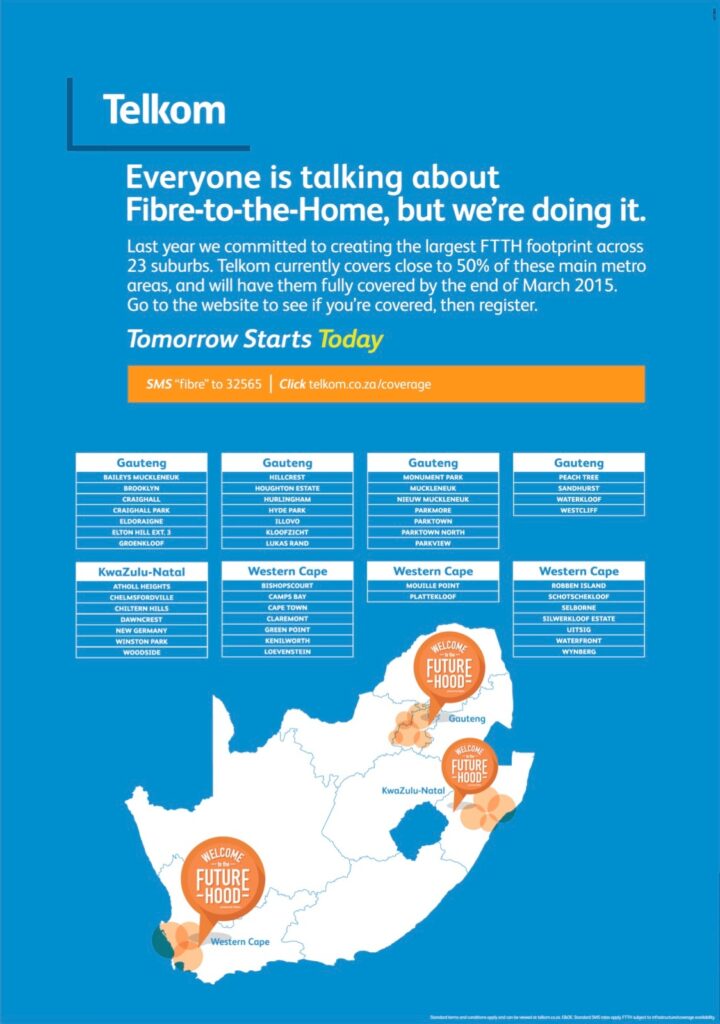
1. Visit the Official Telkom Coverage Checker
To check Telkom Fibre coverage in your area, you can follow these steps:
- Visit the Telkom website: Go to the official Telkom website using your web browser.
- Locate the coverage checker: Look for a section or page on the Telkom website that allows you to check the availability of Telkom Fibre in your area or visit the URL, https://www.telkom.co.za/check-coverage. This section is usually called “Coverage” or “Check Coverage.”
- Enter your address or location: Once you’ve found the coverage checker, enter your residential or business address, or the specific location where you want to check Telkom Fibre availability. Provide accurate information to ensure accurate results.
- Initiate the coverage check: After entering your address, click on the “Check Coverage” or a similar button to start the coverage check process.
Review the results: The coverage checker will display the results indicating whether Telkom Fibre is available in your area or not. It may provide information about the available fibre packages, speeds, and other relevant details.
2. Use Third-Party Fibre Coverage Maps
There are also independent fibre maps that show fibre coverage from multiple networks, including Telkom (via Openserve), Vumatel, Frogfoot, and others. Enter your address to see who covers your area:
FibreTiger coverage map covers Telkom/Openserve and other fibre networks.
Fibre In My Area type tools work similarly for address lookup.
These tools are helpful if you want a broader view of available fibre networks near you.
3. Contact Telkom Support
If you’re unsure or the coverage checker is unclear:
Call Telkom Customer Care: 081 180 (for mobile customers)
Telkom Landline Support: 10210
Online chat or support form on the Telkom website
WhatsApp support: 0811 601 700
Telkom agents can confirm coverage and help you interpret the results.
READ ALSO: How To Set Up My Telkom App
Why Does Telkom Fibre Not Work In My Area
There could be several reasons why Telkom Fibre may not be available or may not work in your area:
- Infrastructure limitations: Telkom Fibre requires the installation of fibre optic cables in your area to provide high-speed internet connectivity. If the necessary infrastructure has not been installed or is not available in your area, it can prevent Telkom Fibre from being accessible.
- Coverage limitations: Telkom Fibre may have limited coverage and may not be available in all areas. The availability of Telkom Fibre depends on the company’s network expansion plans and prioritization of different regions or neighborhoods. It is possible that Telkom Fibre has not yet been extended to your specific location.
- Geographic or logistical challenges: Certain geographical factors or logistical challenges can impact the deployment of fibre optic infrastructure. For example, if your area has difficult terrain, remote locations, or other obstacles that make it challenging to lay fibre optic cables, it may delay or prevent the availability of Telkom Fibre in your area.
- Regulatory or legal restrictions: There might be specific regulations or legal requirements that impact the deployment of fibre optic infrastructure in certain areas. These regulations can vary from region to region and may restrict the availability of Telkom Fibre in specific locations.
- Demand and business considerations: Telkom, like any other service provider, makes decisions based on demand and business considerations. If there is insufficient demand or if the costs associated with deploying Telkom Fibre in your area are deemed to be economically unviable, it may delay or prevent its availability.
Is My Area Eligible For Telkom Fibre
To check if your area is eligible for Telkom Fibre, you can visit Telkom’s website and use their coverage checker tool. Enter your address or location details, and the tool will indicate if fibre is available in your area. Alternatively, you can contact Telkom’s customer support for assistance in determining fibre availability in your specific location.
What the Coverage Results Mean
After checking your address:
Fibre Available – You can proceed to sign up for a Telkom Fibre plan
No Fibre Yet – Infrastructure may not have been deployed there yet
Nearby Fibre – Sometimes fibre is nearby but not yet connected to your property
If infrastructure is close but not connected, you may express interest in getting fibre installed via Telkom or Openserve through their demand capture processes.
Why Telkom Fibre Might Not Be Available
Even if Telkom has a broad fibre network, the following can affect coverage:
- Fibre infrastructure has not been built to your street yet
- Low demand in your area relative to rollout costs
- Regulatory or logistical challenges with installation
- Restrictions due to local permissions or municipal planning
How Can I Improve My Telkom Signal?
If you are experiencing weak or poor signal with your Telkom mobile network, there are several steps you can take to potentially improve it:
Check your location: The strength of the signal can vary depending on your location. If you are indoors or in an area with obstacles like tall buildings or thick walls, it can affect the signal reception. Try moving to a different location, preferably near a window or in an open area, to see if the signal improves.
- Restart your device: This can refresh the network connection and improve signal reception.
- Check signal bars and network mode: Ensure that your device is set to the correct network mode. You can access this in the settings menu of your mobile device. Select the preferred network mode (such as 2G, 3G, or 4G/LTE) based on the available options. Additionally, check the signal bars on your device to see if there is any improvement.
- Disable battery-saving mode or airplane mode: Some devices have battery-saving modes that can limit network connectivity to conserve power. Check if your device is in battery-saving mode and disable it if necessary. Similarly, make sure your device is not in airplane mode, as this mode disables all wireless connections.
- Move away from interference sources: Certain electronic devices or appliances can cause signal interference. Keep your mobile device away from devices like cordless phones, microwave ovens, and Wi-Fi routers, as they can affect the signal quality. Moving to a different location within your premises can help mitigate interference.
- Try a different location or elevation: If you’re in a rural or remote area, consider moving to a higher elevation or a location with fewer obstructions. This can potentially improve your line-of-sight to the nearest cell tower and enhance signal reception.
- Consider an external antenna or signal booster: If you consistently experience weak signal at your location, you may want to explore options like installing an external antenna or using a signal booster. These devices can help amplify the incoming signal and improve reception.
READ ALSO: How To Transfer Data On Telkom South Africa
Why Is Telkom Fibre Slow?
Telkom fibre may experience slow speeds due to several reasons. Here are some potential factors that can contribute to slow Telkom fibre:
- Network Congestion: If many users are connected to the same Telkom fibre network in your area and actively using it, the increased demand can lead to congestion and slower speeds. During peak usage hours, such as evenings when many people are online, the network may experience slower performance.
- Bandwidth Limitations: Your subscribed Telkom fibre package may have specific bandwidth limits. If you reach or exceed the allocated data limit, Telkom may reduce your connection speed until the next billing cycle or offer data speed throttling, resulting in slower performance.
- Technical Issues: Technical problems within the Telkom fibre network, such as faulty equipment, damaged cables, or network maintenance activities, can impact the speed and stability of the connection.
- Wi-Fi Interference: Slow speeds can also be caused by Wi-Fi interference from nearby devices or other wireless networks. Interference from appliances, walls, or other physical obstructions can weaken the Wi-Fi signal, leading to reduced speeds.
- Router Performance: The performance and capabilities of your Wi-Fi router can influence the speed of your Telkom fibre connection. If you have an outdated or inadequate router, it may not be able to handle high-speed fibre connections efficiently, resulting in slower speeds.
What Is The Speed of Telkom Fibre?
The speed of Telkom Fibre can vary depending on the specific package or plan you subscribe to. Telkom offers a range of fibre broadband plans with different speed options to cater to the diverse needs of their customers. The available speeds typically include:
- Basic Speeds: Telkom Fibre plans usually start with entry-level speeds up to 10Mbps (megabits per second). These speeds are suitable for light internet usage such as browsing the web, checking emails, and basic streaming.
- Mid-range Speeds: Telkom also offers mid-range fibre speeds that range from 20Mbps to 50Mbps. These speeds are suitable for households with multiple users and devices, enabling activities like HD streaming, online gaming, and simultaneous browsing.
- High-speeds: For customers with demanding internet requirements or larger households, Telkom provides higher-speed fibre options with over 100Mbps. These speeds support bandwidth-intensive tasks, such as 4K streaming, large file downloads/uploads, and heavy online gaming.
How Do I Test My Telkom Fibre Speed?
To test your Telkom Fibre speed, you can follow these steps:
- Connect your device (computer, laptop, or smartphone) to your Telkom Fibre network either via a wired Ethernet connection or Wi-Fi.
- Open a web browser (such as Google Chrome, Mozilla Firefox, or Safari) on your device.
- Visit a reliable speed testing website. Popular options include Ookla’s Speedtest (www.speedtest.net) or Fast.com (www.fast.com).
- On the speed testing website, click the “Go” or “Start” button to initiate the speed test. The website will begin measuring your download and upload speeds.
- Wait for the speed test to complete. This process usually takes just a few seconds.
- Once the test is finished, the website will display your download and upload speeds in Mbps (megabits per second).
How Do I Contact Telkom Fibre?
To contact Telkom Fibre, you can reach their customer support by calling their dedicated fibre helpline at 081180. Alternatively, you can visit the Telkom website and use their online contact form or live chat feature to get in touch with their support team.
Tips to Improve Your Search Results
Enter your full address (not just suburb)
Try alternative postcode formats
Contact Telkom support with exact address details
Use third-party maps to cross-verify results
How Long Does Fibre Installation Take?
Once coverage is confirmed and you sign up, installation times typically range from 10–21 working days, depending on technician availability and specific terms in your area. This aligns with general deployment timelines for Openserve-based fibre connections.
Is Telkom Fibre Installation Free?
Telkom’s fiber installation may or may not be free, as it depends on various factors such as promotional offers, service plans, and specific terms and conditions. In some cases, Telkom may offer free installation as part of a promotional campaign or as an incentive to attract new customers.
To determine if Telkom offers free fiber installation in your specific case, it is recommended to directly contact Telkom’s customer support or visit their official website. They will be able to provide you with the most accurate and up-to-date information regarding installation fees, promotions, and any associated costs. It’s always a good idea to clarify any installation charges or terms of service before proceeding with a Telkom fiber installation to avoid any unexpected costs.
How Long Does Telkom Take To Install Fibre?
The installation process for Telkom Prepaid Fibre access typically takes an average of 10 working days. During this period, an Openserve technician, who handles the installation process on behalf of Telkom, will reach out to the customer to schedule an appointment for the installation of the fibre access. It’s important to note that the installation appointment covers the setup up to the Optical Network Terminal (ONT), which is the device that connects the fiber optic cable to your premises.
The technician will arrive at the agreed-upon appointment time and perform the necessary tasks to establish the fiber connection up to the ONT. This involves installing and configuring the necessary equipment to ensure a stable and reliable connection. The technician will also test the connection to ensure it is functioning properly.
Fibre Speed Expectations
Telkom offers various fibre broadband plans with different speeds, often including:
- Basic speeds around 10–20 Mbps
- Mid-range plans 20–50 Mbps
- Higher-speed plans 100 Mbps or more
Actual speeds vary based on your package and network conditions. The Telkom speed test tool lets you verify your connection performance once installed.
How Long Does Telkom Take To Install Fibre?
The installation process for Telkom Prepaid Fibre access typically takes an average of 10 working days. During this period, an Openserve technician, who handles the installation process on behalf of Telkom, will reach out to the customer to schedule an appointment for the installation of the fibre access. It’s important to note that the installation appointment covers the setup up to the Optical Network Terminal (ONT), which is the device that connects the fiber optic cable to your premises.
The technician will arrive at the agreed-upon appointment time and perform the necessary tasks to establish the fiber connection up to the ONT. This involves installing and configuring the necessary equipment to ensure a stable and reliable connection. The technician will also test the connection to ensure it is functioning properly.
Frequently Asked Questions (FAQs)
Can I check Telkom Fibre coverage online?
Yes — use the official Telkom Coverage Checker at to see if fibre is available at your address.
Does fibre availability vary by location?
Yes — fibre rollout is progressive, and not all suburbs have fibre yet. You must check per address.
What if Telkom reports no fibre coverage?
You may express demand to Telkom, use third-party maps for alternatives, or check if other fibre networks like Vumatel or Frogfoot cover your area.
Is fibre installation free?
Installation may be free during promotions, but it can vary depending on package and area — always confirm with Telkom.
Does fibre guarantee faster internet than LTE?
Yes — fibre provides more consistent high speeds than mobile LTE, especially for heavy usage like streaming or gaming.
Can I test internet speed before subscribing?
Most speed tests apply after installation — but third-party maps may show typical speeds for your area.
Conclusion
Checking Telkom Fibre coverage before you sign up ensures you choose the best broadband solution for your home or business. Using the official coverage checker, third-party tools, and direct support from Telkom will give you the most accurate and current results for 2026.